
DFMA Handbook: Design for Manufacturing and Assembly
Outline of a free practical DFMA handbook in four parts and eleven chapters: part count, handling and insertion, machining, molding, sheet metal, welding, metrics and team practice. In writing, not yet available to download.
- 3 min read
Status: in writing. This page shows the planned outline so you can see what the book will cover. The manuscript is not finished and there is nothing to download yet. If you want a note when it is ready, get in touch.
A practical handbook on Design for Manufacturing and Assembly (DFMA): how to cut part count, make parts easy to handle and insert, and design for machining, molding, casting, sheet metal and welding, then build the habit into a team. It is written for design engineers who want a lower product cost without a lower quality.
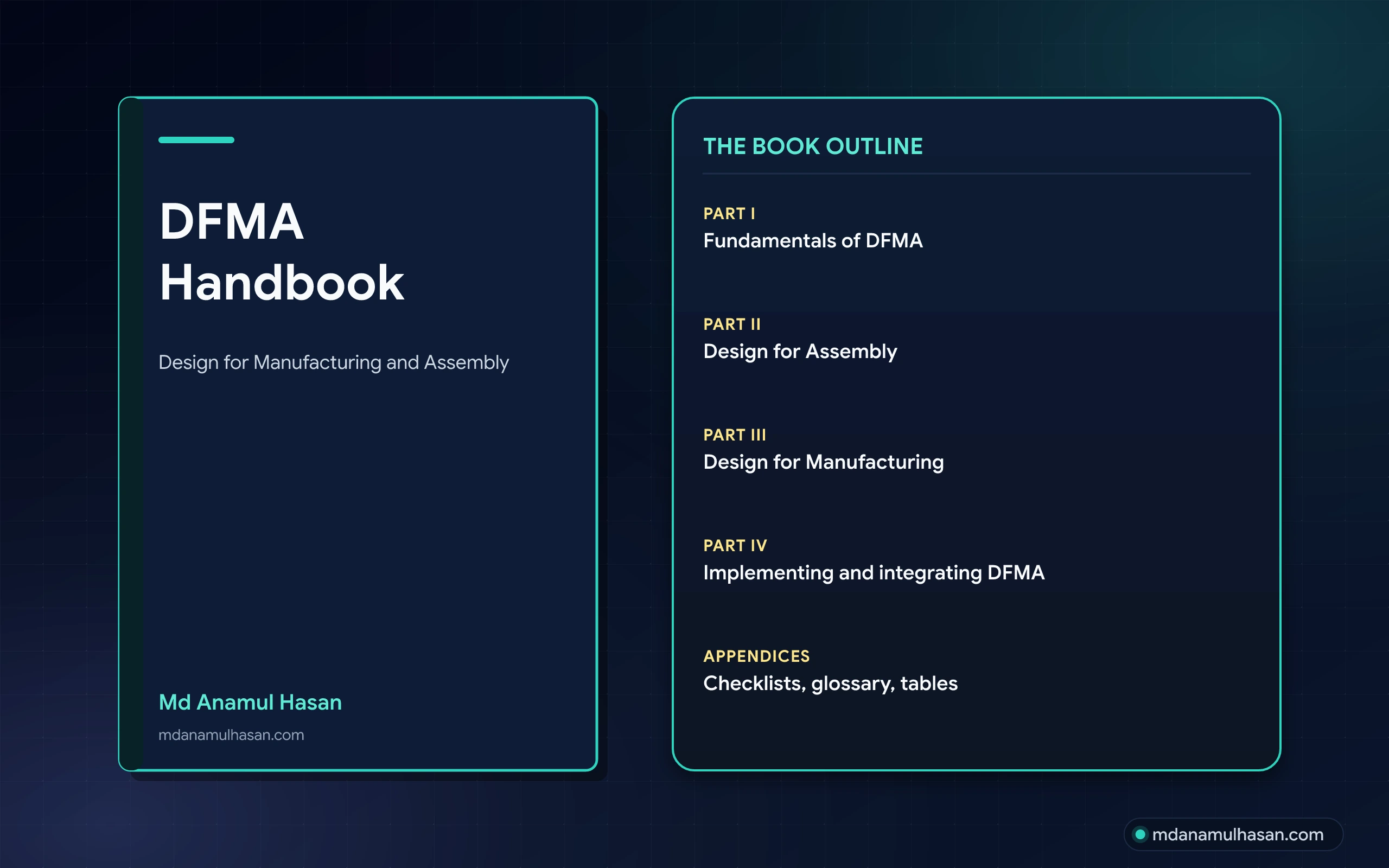
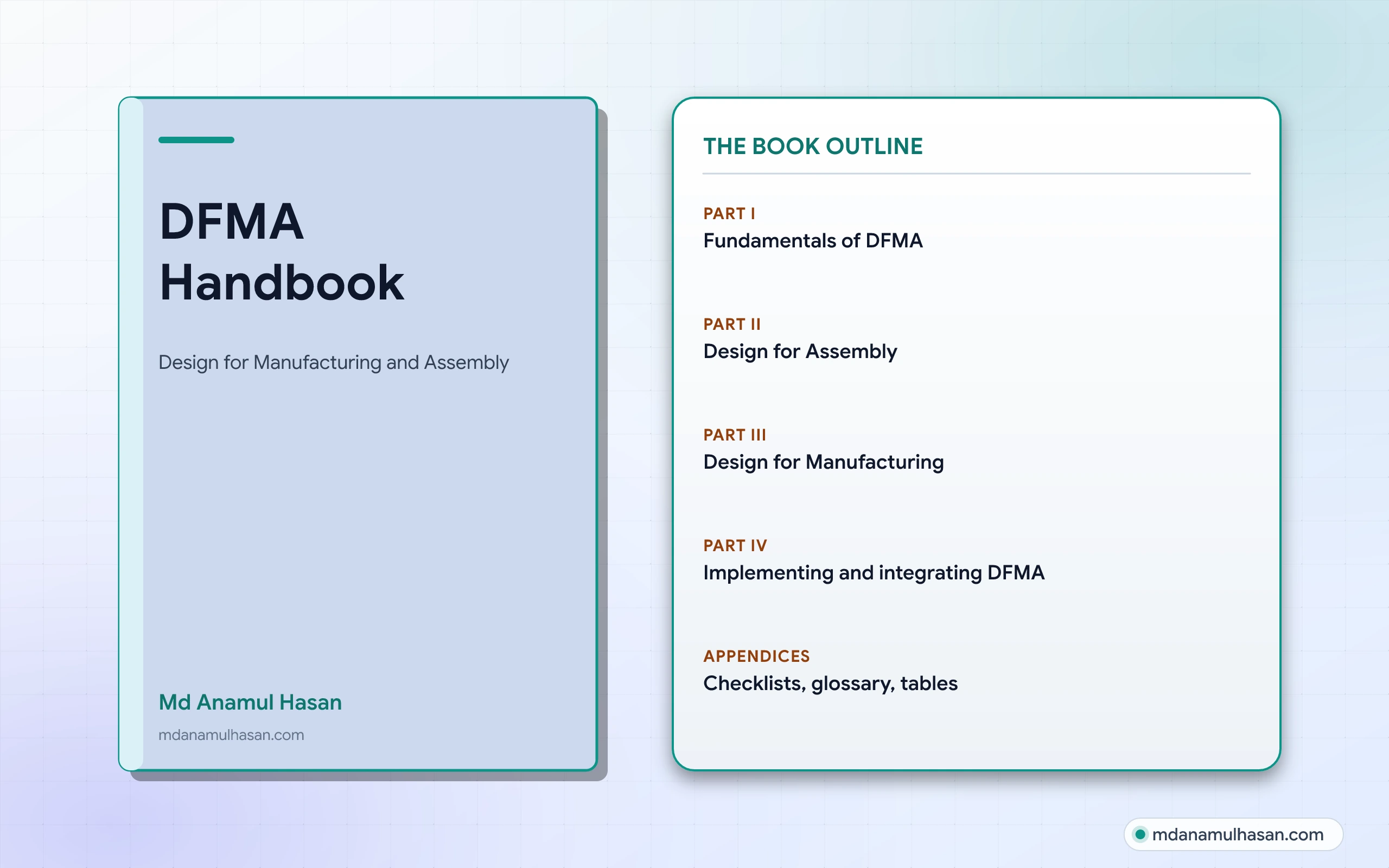
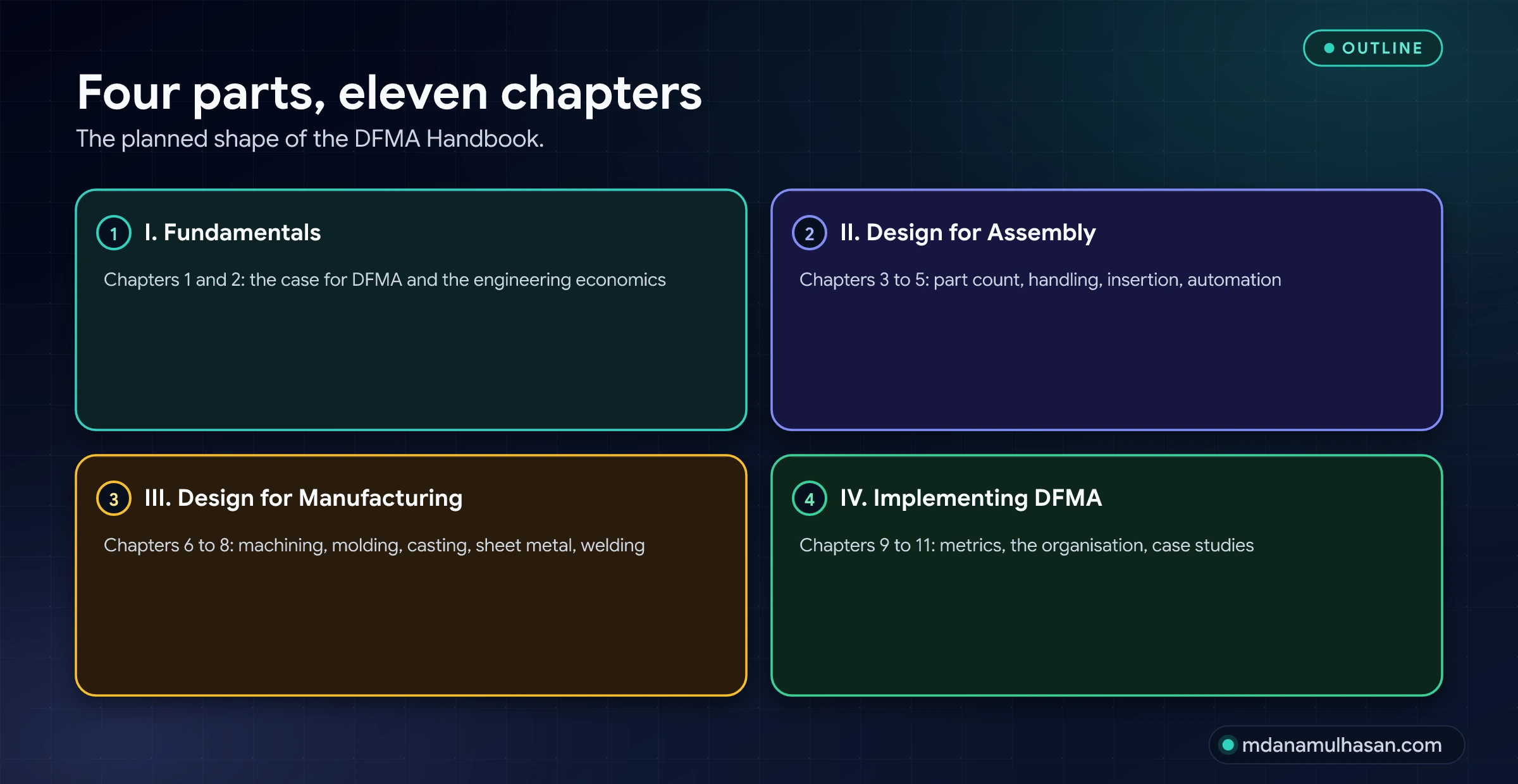
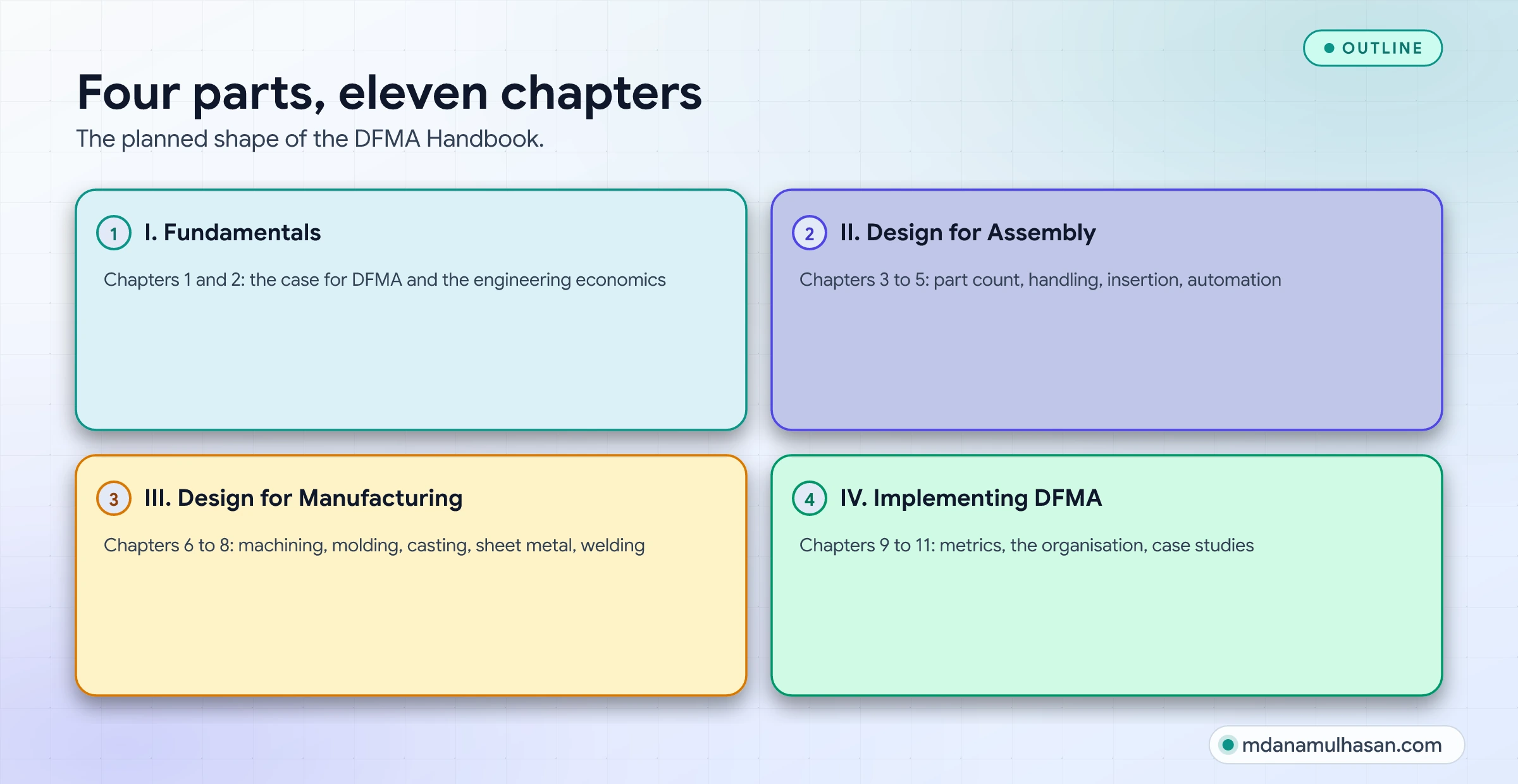
The planned outline
| Part | Chapters |
|---|---|
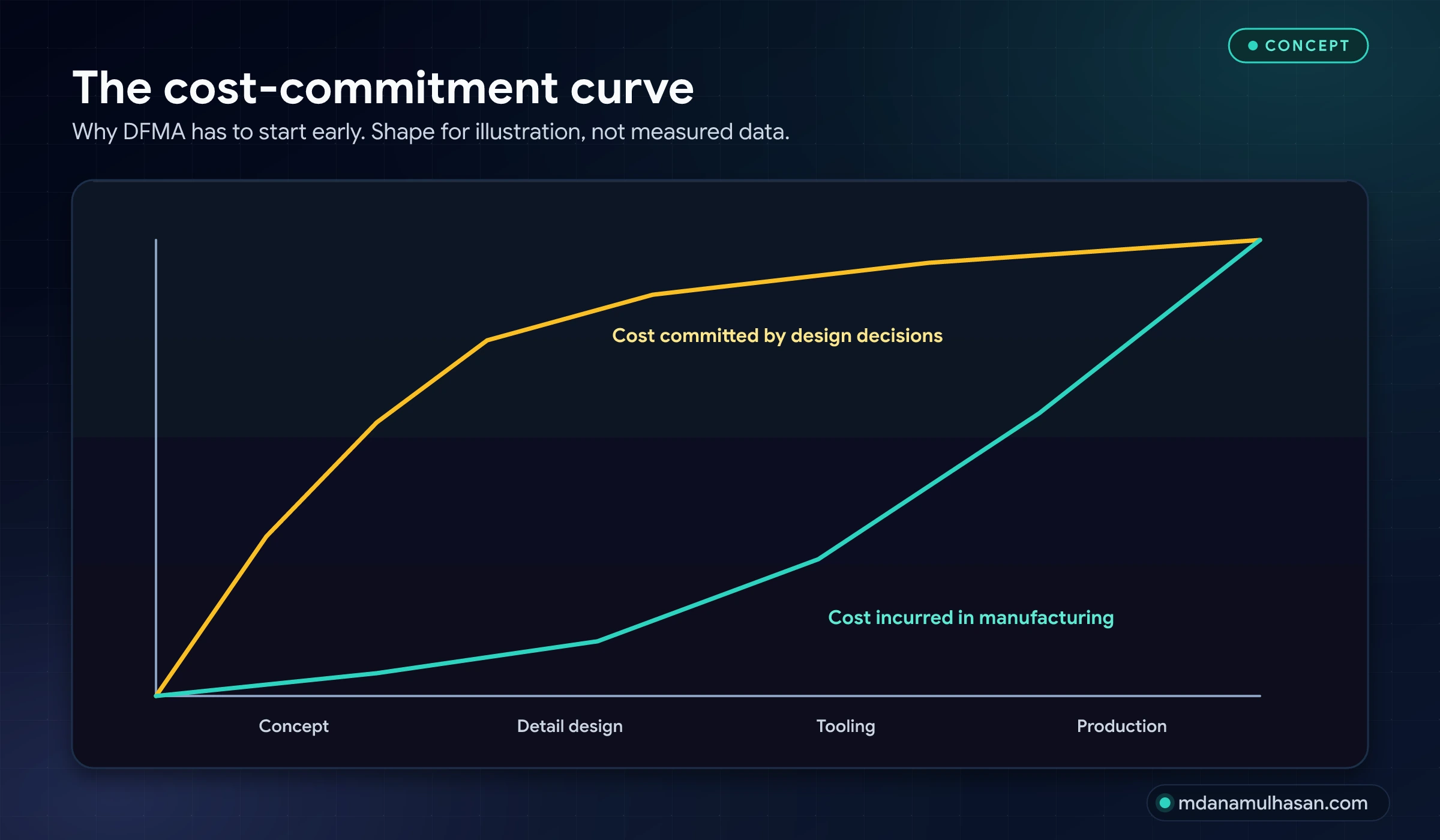
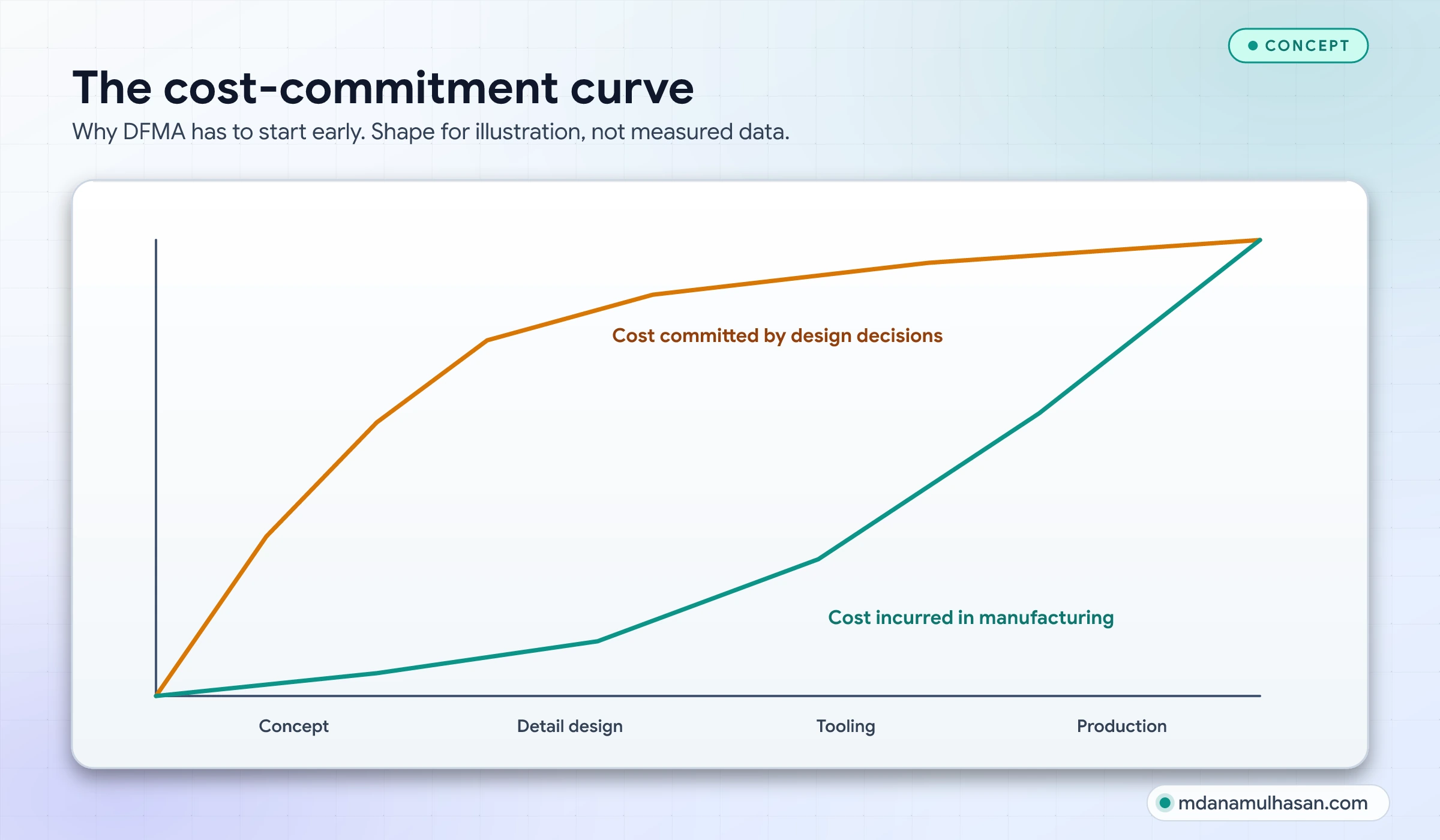
| I. Fundamentals of DFMA | 1. The imperative for DFMA: definitions, the cost-commitment curve, history and the business case. 2. Essential engineering economics: total product cost, assembly cost, manufacturing cost drivers, a worked fastener-assembly exercise. |
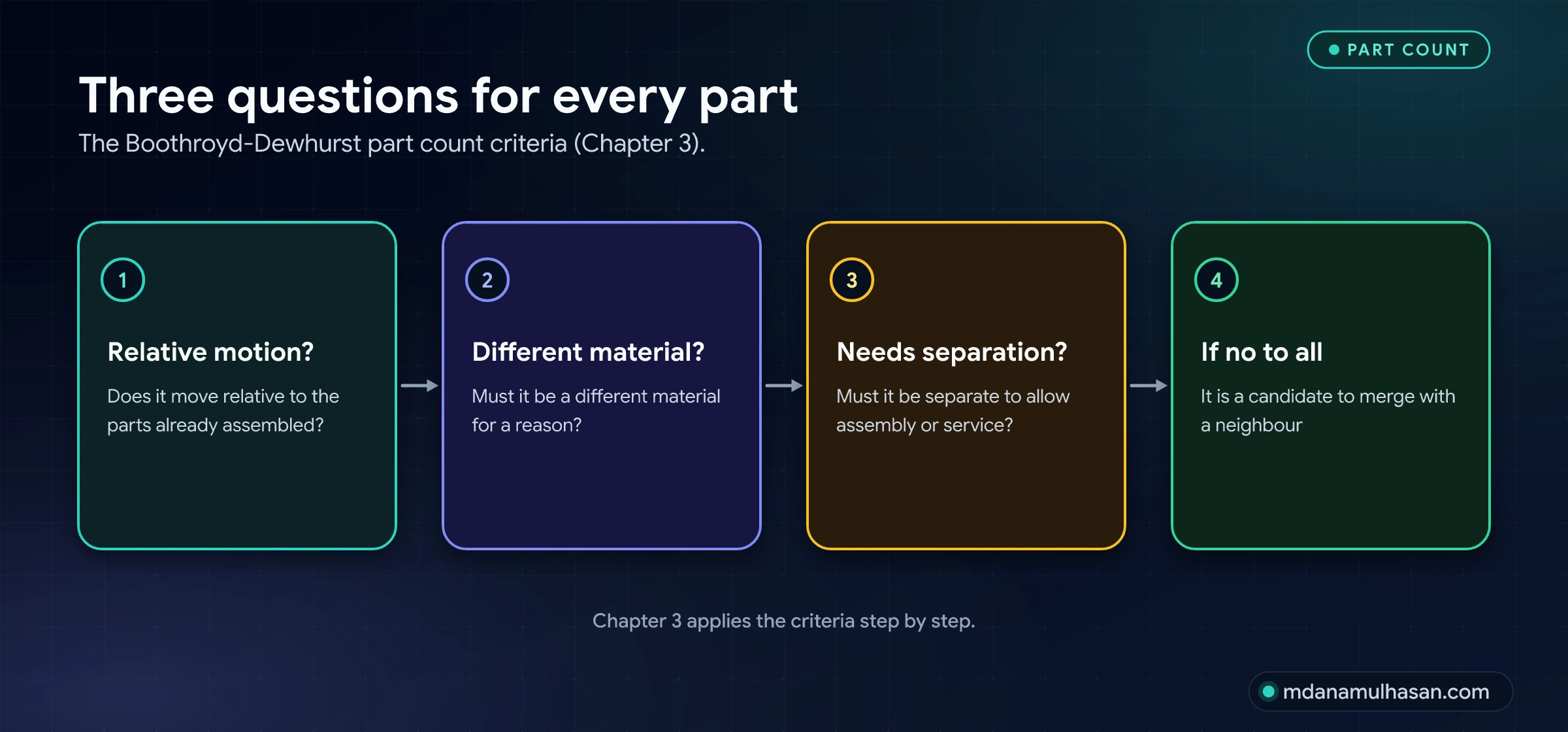
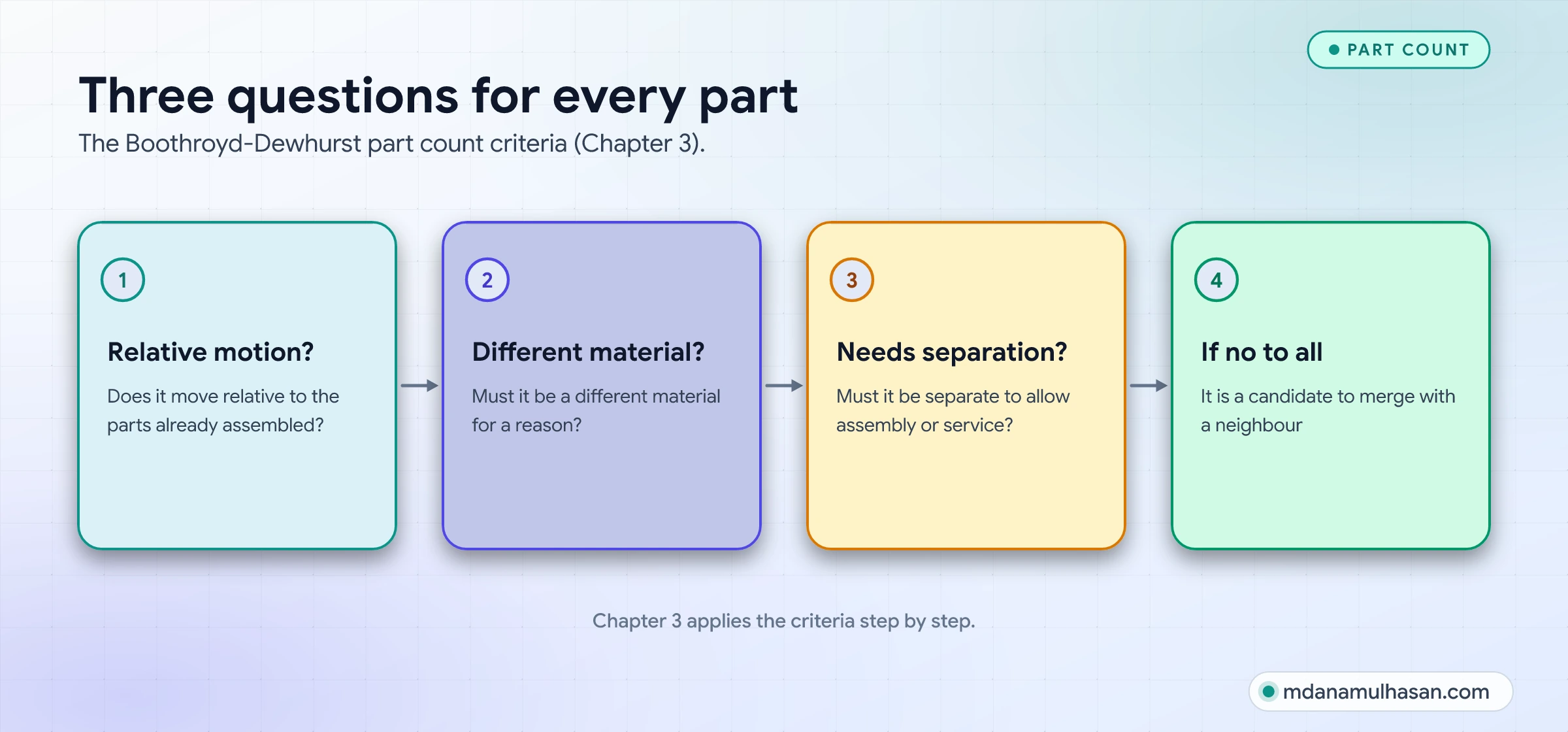
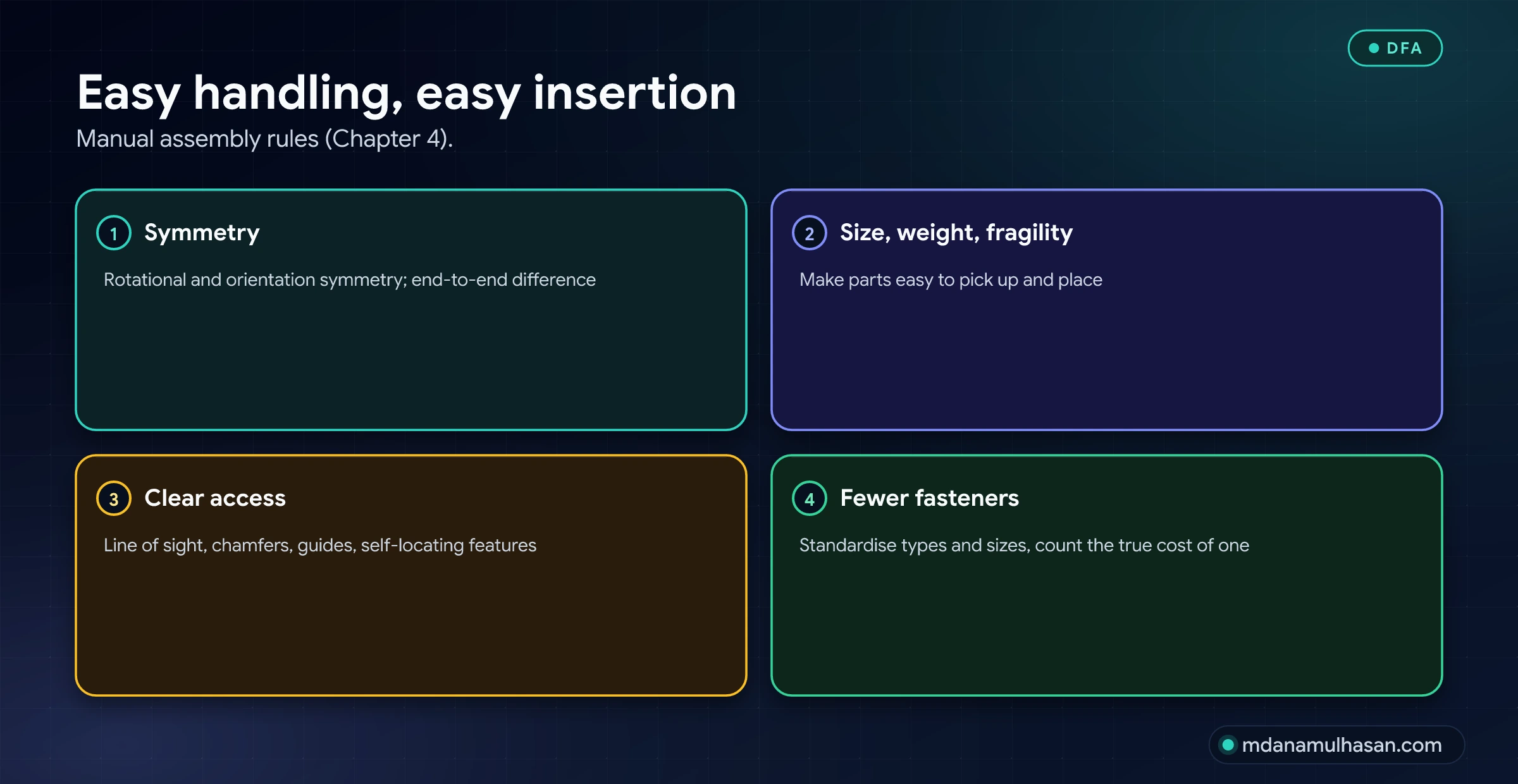
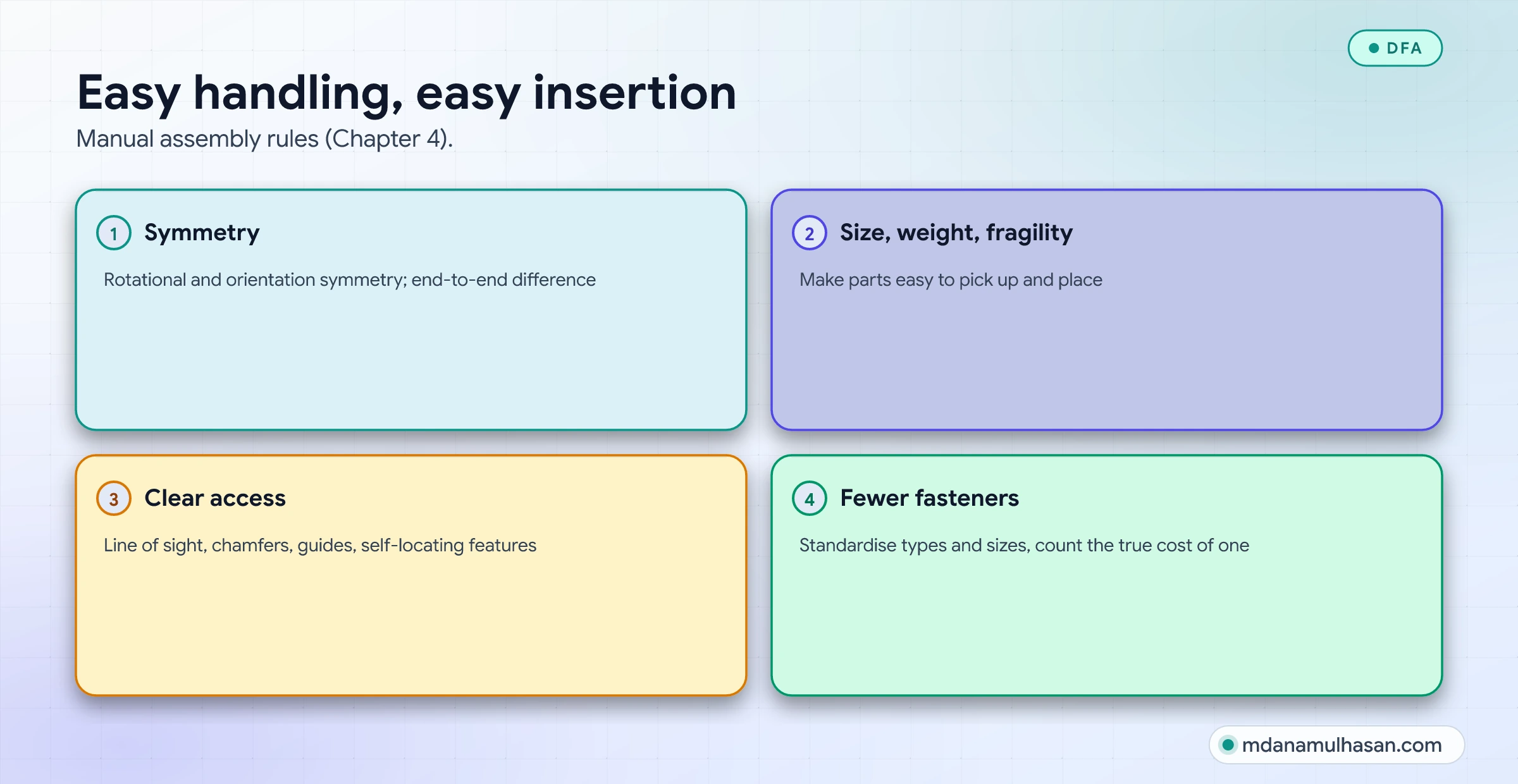
| II. Design for Assembly | 3. Minimising part count: the three Boothroyd-Dewhurst criteria, integration strategies, snaps, clips and living hinges. 4. Easy handling and insertion: symmetry, access, chamfers, fastener reduction, poka-yoke. 5. Automated and robotic assembly: feeders, grippers, fixturing, lean line design. |
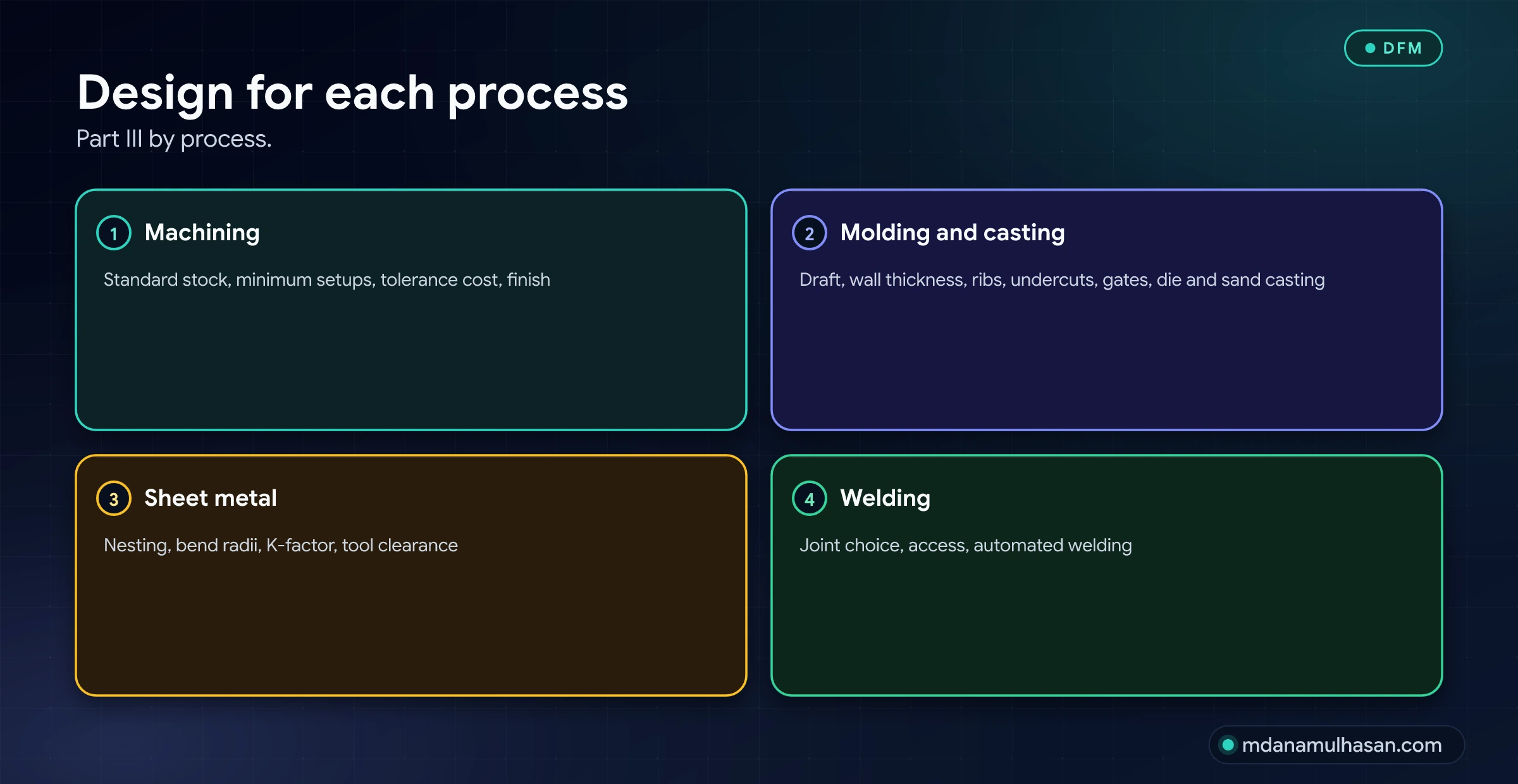
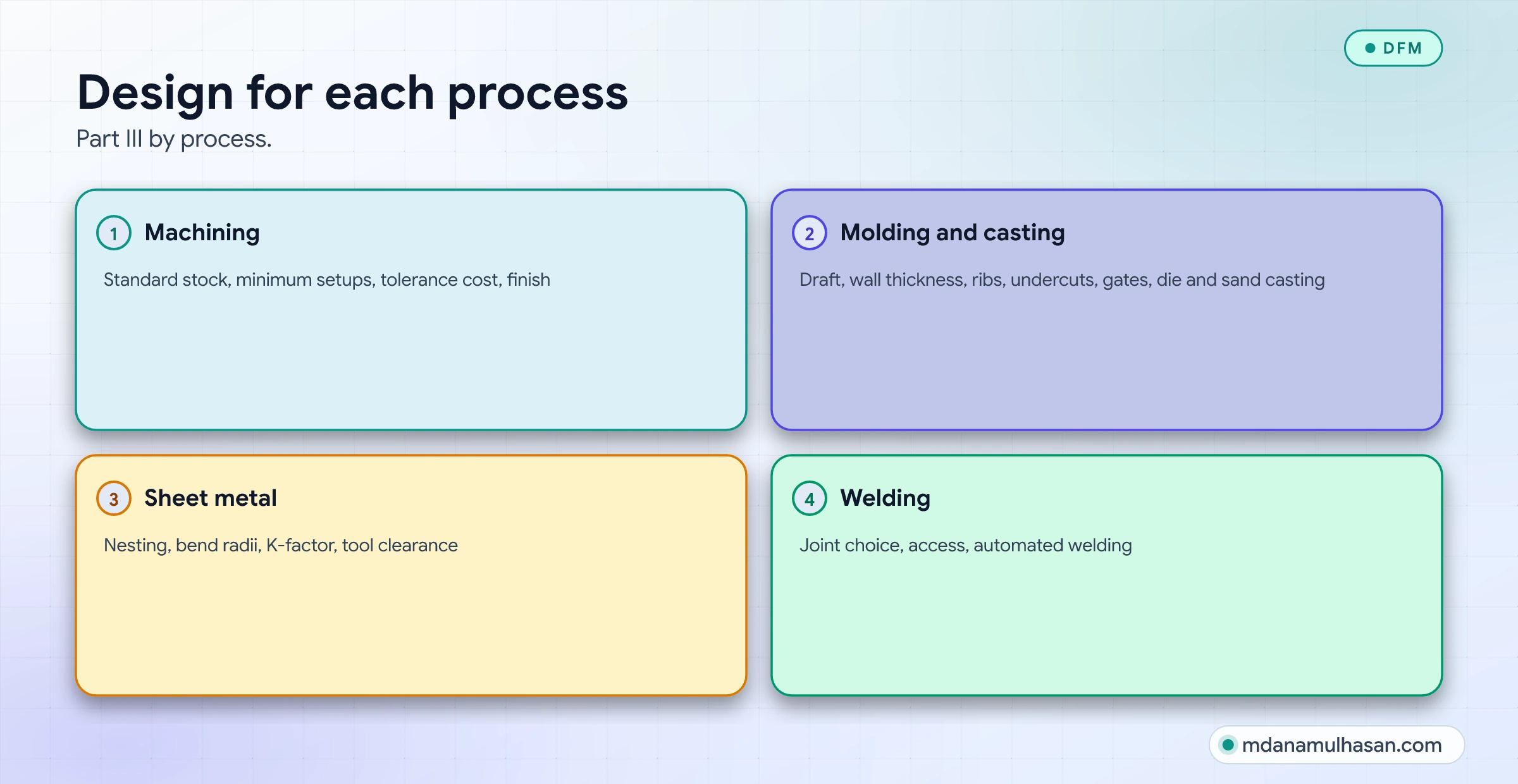
| III. Design for Manufacturing | 6. Machined components: stock, setups, tolerances and surface finish. 7. Injection molding and casting: draft, walls, ribs, undercuts, gates, die and sand casting. 8. Sheet metal and welding: nesting, bends and K-factor, weld joint design and automation. |
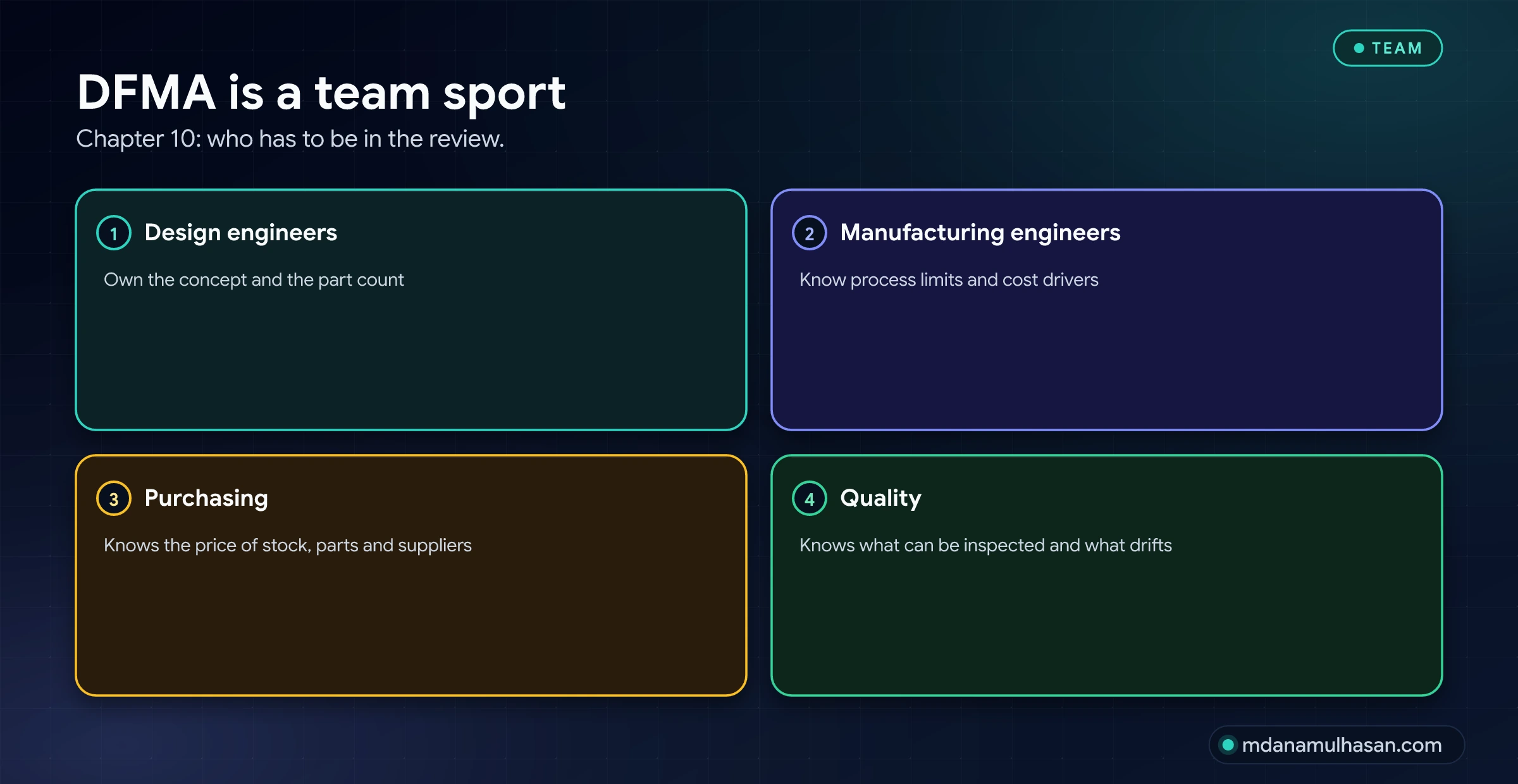
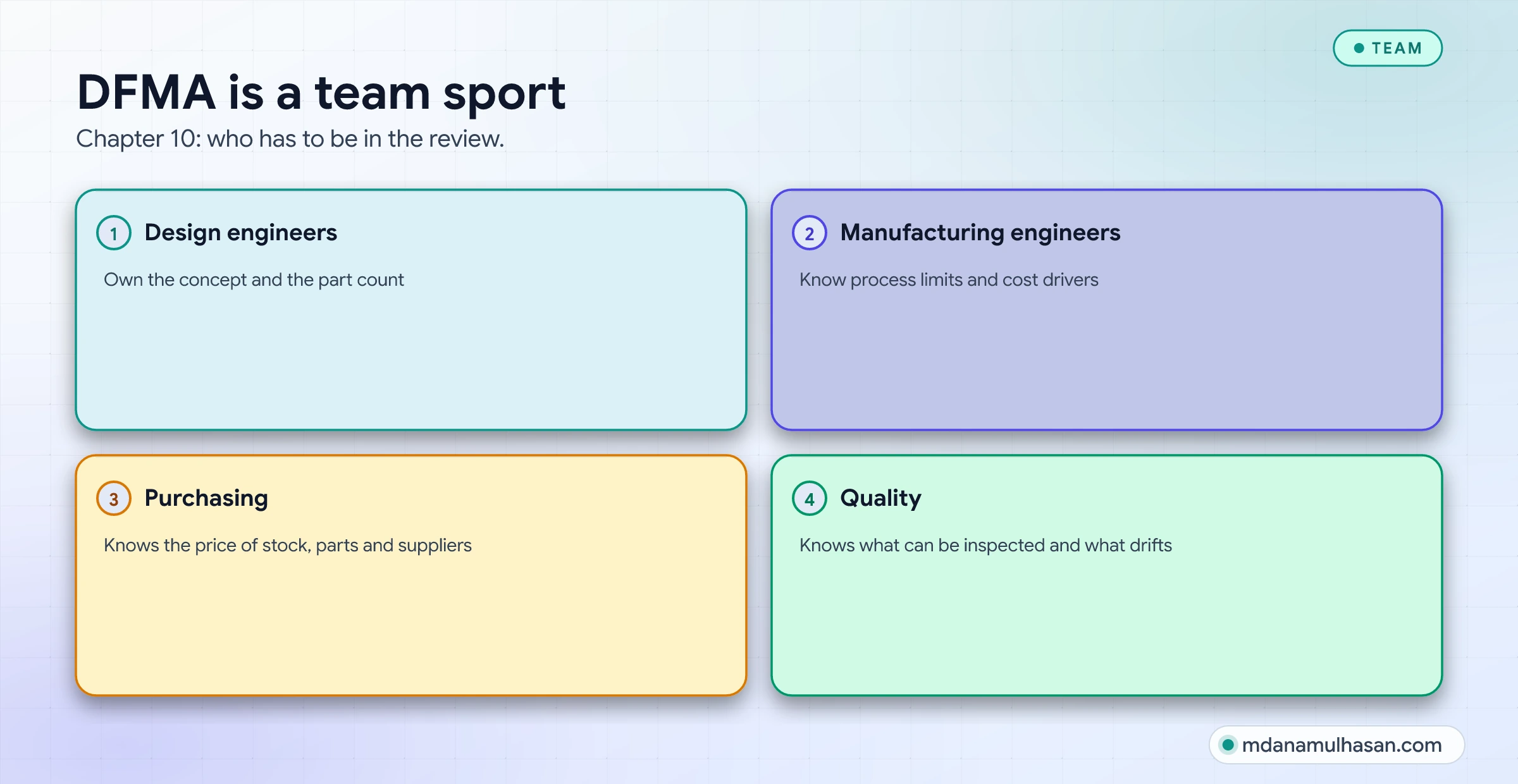
| IV. Implementing and integrating DFMA | 9. Software tools and metrics: the DFA index, DFA efficiency, cost comparison, linking DFMA to CAD and PLM. 10. DFMA in the organisation: multi-disciplinary reviews, training, design for service, environment and logistics. 11. Comprehensive case studies and a capstone project. |
| Appendices | A. Quick-reference DFMA checklists by process. B. Glossary. C. Common material properties and cost tables. D. Solutions to chapter exercises. |
Metrics the book builds on
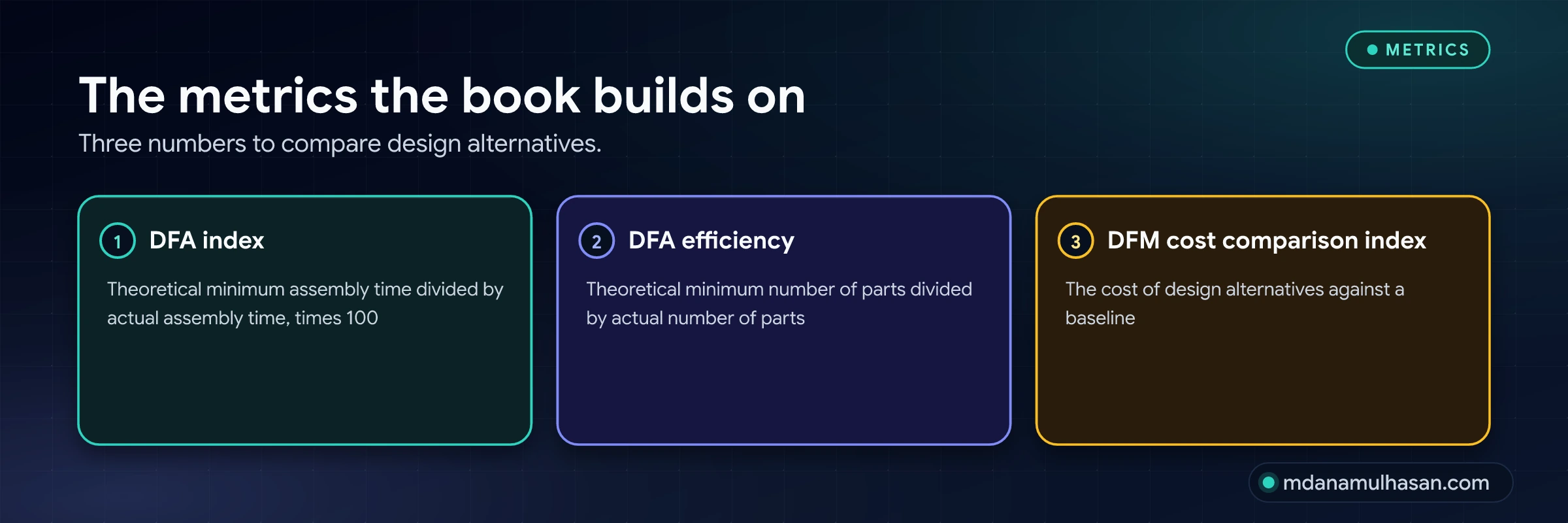
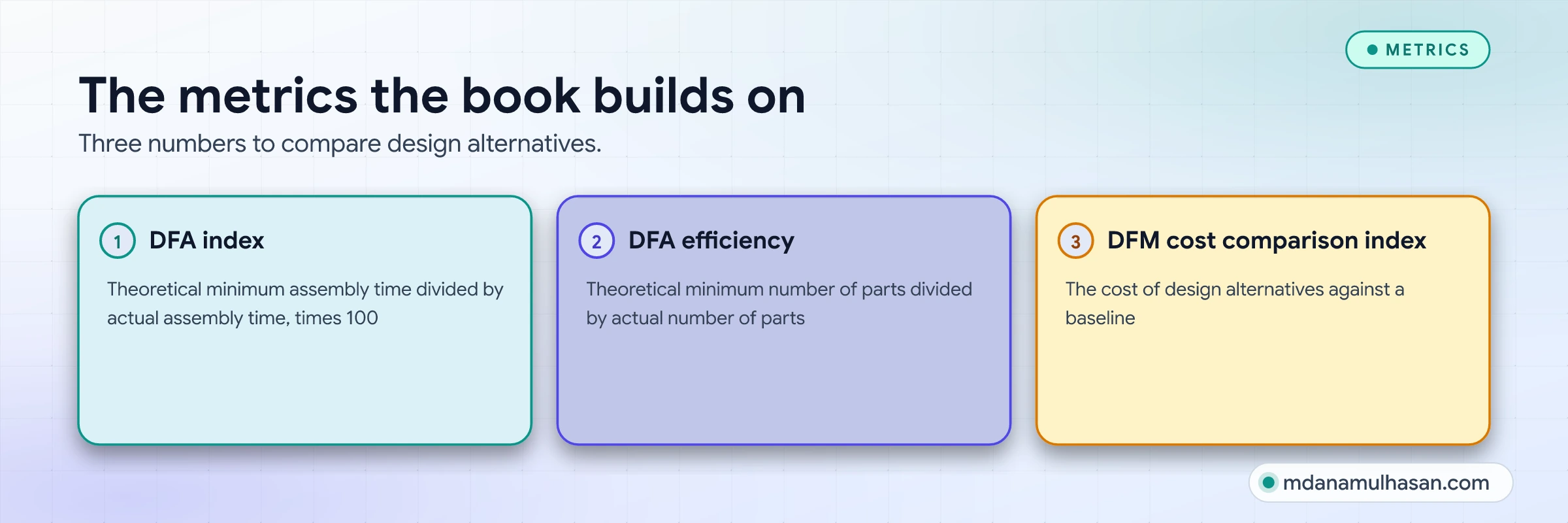
- DFA index = theoretical minimum assembly time divided by actual assembly time, times 100.
- DFA efficiency = theoretical minimum number of parts divided by actual number of parts.
- DFM cost comparison index: the cost of design alternatives against a baseline.


Related reading now
- Designing Heavy Welded Structures for Manufacturability (DFM) and the free Welded Structure DFM Toolkit: the welding chapter in practice.
- Sheet Metal K-Factor and Bend Deduction Mathematics and the free Sheet Metal Bend Calculator: the sheet metal chapter in practice.
- GD&T Feature Control Frame Handbook: tolerancing from a cost perspective.
Have a DFMA question the book should answer? Tell me.
Share this engineering resource
Recommend this handbook to colleagues.
Keep Exploring
Related Resources
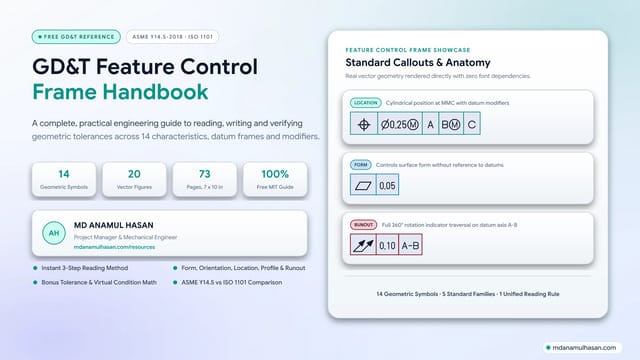
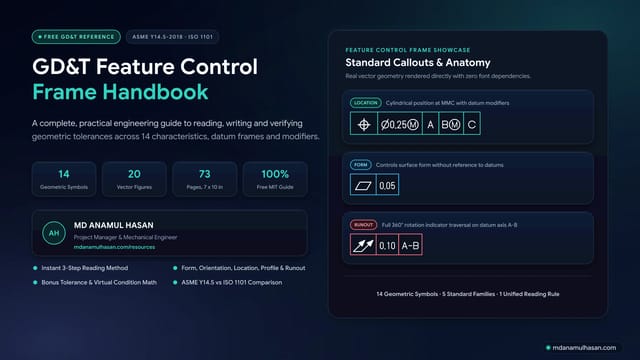
GD&T Feature Control Frame Quick Reference Handbook
A 73-page engineering handbook to ASME Y14.5-2018 and ISO 1101 geometric tolerancing: feature control frames, 3-2-1 datum systems, material condition modifiers, bonus tolerance calculations, drawing traps and release checklists. Free PDF.
Mechanical Design Data Book: The Mechanical Engineer’s Data Companion
Outline of a free mechanical engineering data companion in four parts and thirteen chapters: units, materials, stress, fatigue, thermodynamics, fluids, fasteners, tolerances, gears, bearings and vibration. In writing, not yet available to download.